Tyre buying guide
How to Read a Tyre Size
Published 19 May 2026 · TyreCompare editorial · How we compare prices
Decode 205/55 R16 and load/speed markings on your door jamb, with South African examples and links to live price comparisons.
If you shop for tyres online in South Africa, you will see sizes like 205/55 R16 91V everywhere: on retailer sites, in WhatsApp quotes, and on TyreCompare. The numbers are not marketing fluff: they define whether the tyre physically fits your rim, whether your speedometer stays roughly honest, and whether the tyre can legally and safely carry your vehicle when it is fully loaded.
Get any part wrong and you are not just buying the wrong product. You can fail roadworthy, overheat a tyre on a long N1 run, or give your insurer a reason to question a claim after a blowout. This guide walks through each marking using examples you will actually see on SA cars.
Breaking down 205/55 R16
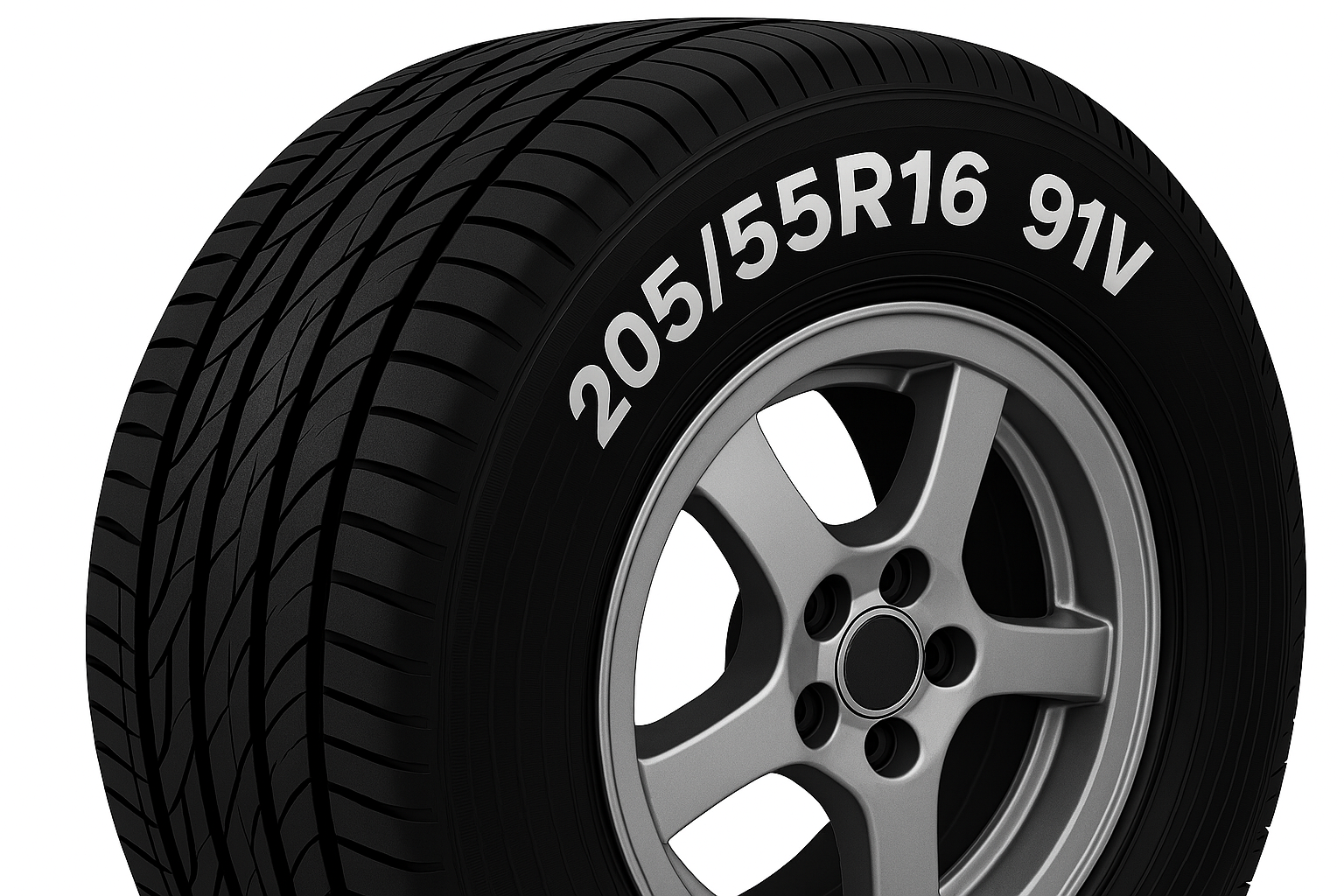
Take 205/55 R16, one of the most common sizes on SA hatchbacks and sedans (VW Polo/Golf class, Toyota Corolla, Honda Civic, and similar).
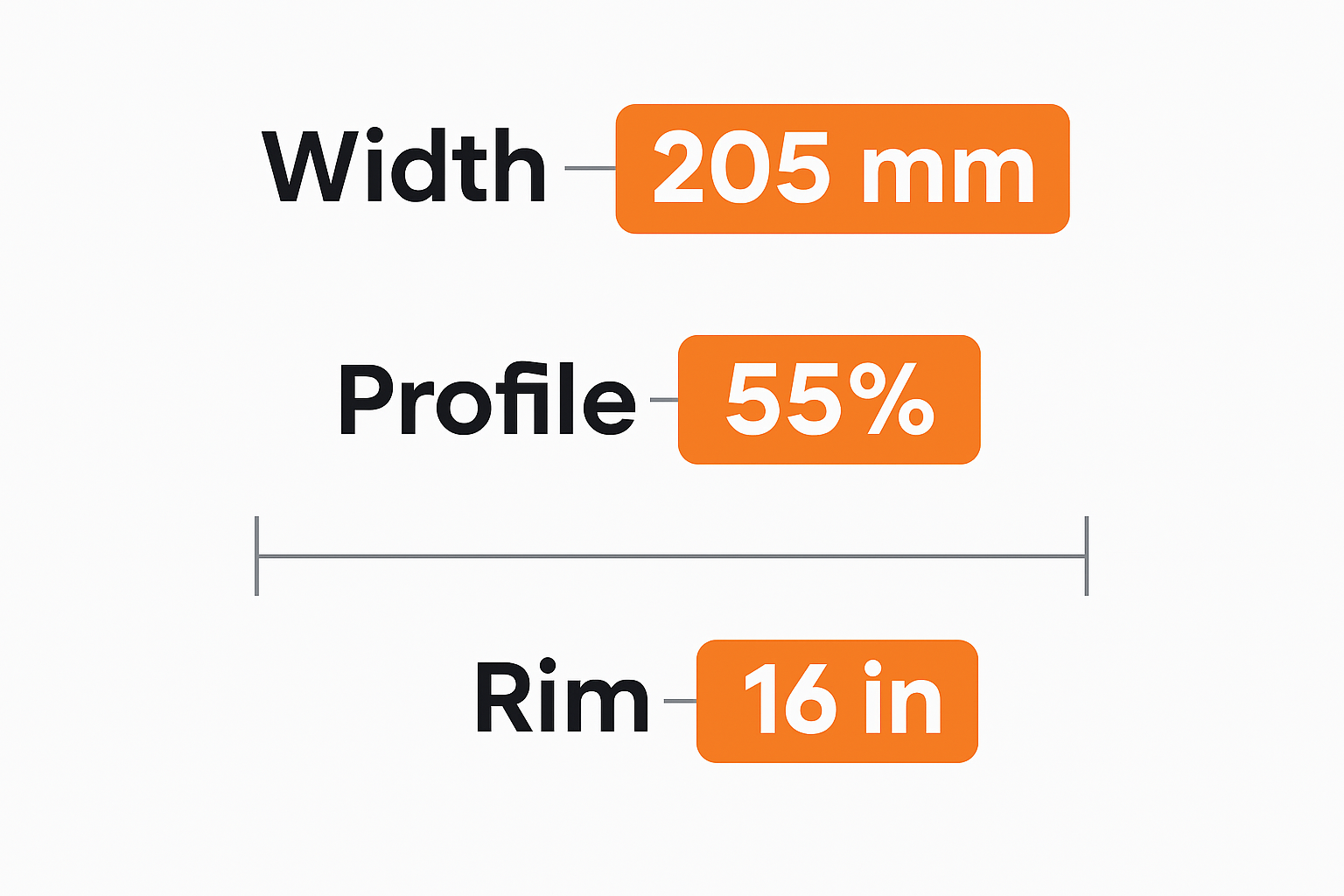
- 205: tread width in millimetres. Wider tyres can mean more grip but also more sensitivity to tram tracks and a harsher ride on Cape Town’s broken side streets.
- 55: aspect ratio. The sidewall height is 55% of 205 mm, about 113 mm on this size. Lower profiles (45, 40) look sharper but give less cushioning over potholes.
- R16: radial construction on a 16-inch rim. The rim diameter must match your wheel; the tyre bead seat is not adjustable.
You will sometimes see the same size written as 205/55R16 (no spaces) or 205/55 R16. They mean the same thing. Once you know your pattern, compare live offers for 205/55 R16 prices across retailers before you book fitment.
Load index and speed rating
After the size block you will usually see two more characters, e.g. 91V. Together they answer different questions:
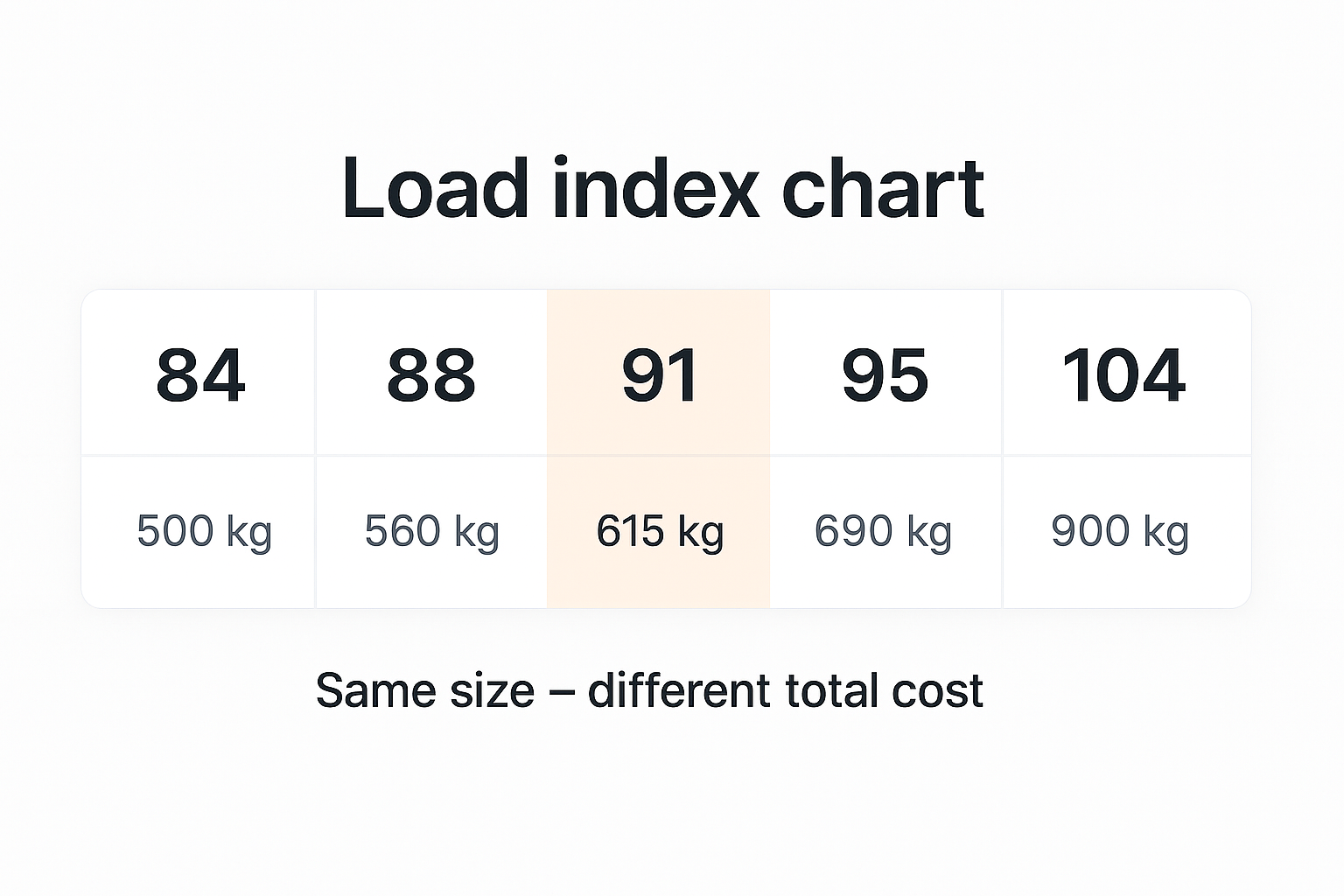
- 91 (load index): maximum weight each tyre is rated to carry at the tyre’s rated pressure. For index 91 that is 615 kg per tyre.
- V (speed rating): maximum sustained speed the tyre is designed to handle when correctly loaded and inflated. V = 240 km/h capability, not a suggestion that you should drive that fast on the N1.
SA examples that trip people up
A Corolla on 205/55 R16 might show 91V on the placard. A Toyota Hilux on 265/65 R17 might need 110 or higher. The tyre is carrying a much heavier vehicle, especially with passengers, canopy, and luggage for a coastal holiday.
| Index | Max load | Typical SA fitment |
|---|---|---|
| 84 | 500 kg | Small hatch (e.g. Picanto, older Swift) |
| 88 | 560 kg | Compact sedans and hatches |
| 91 | 615 kg | Very common on 205/55 R16 (Golf, Corolla, Civic class) |
| 95 | 690 kg | Heavier sedans / small SUVs |
| 104 | 900 kg | Mid-size SUV or loaded double cab |
| 110 | 1060 kg | Bakkie / SUV when placard demands it |
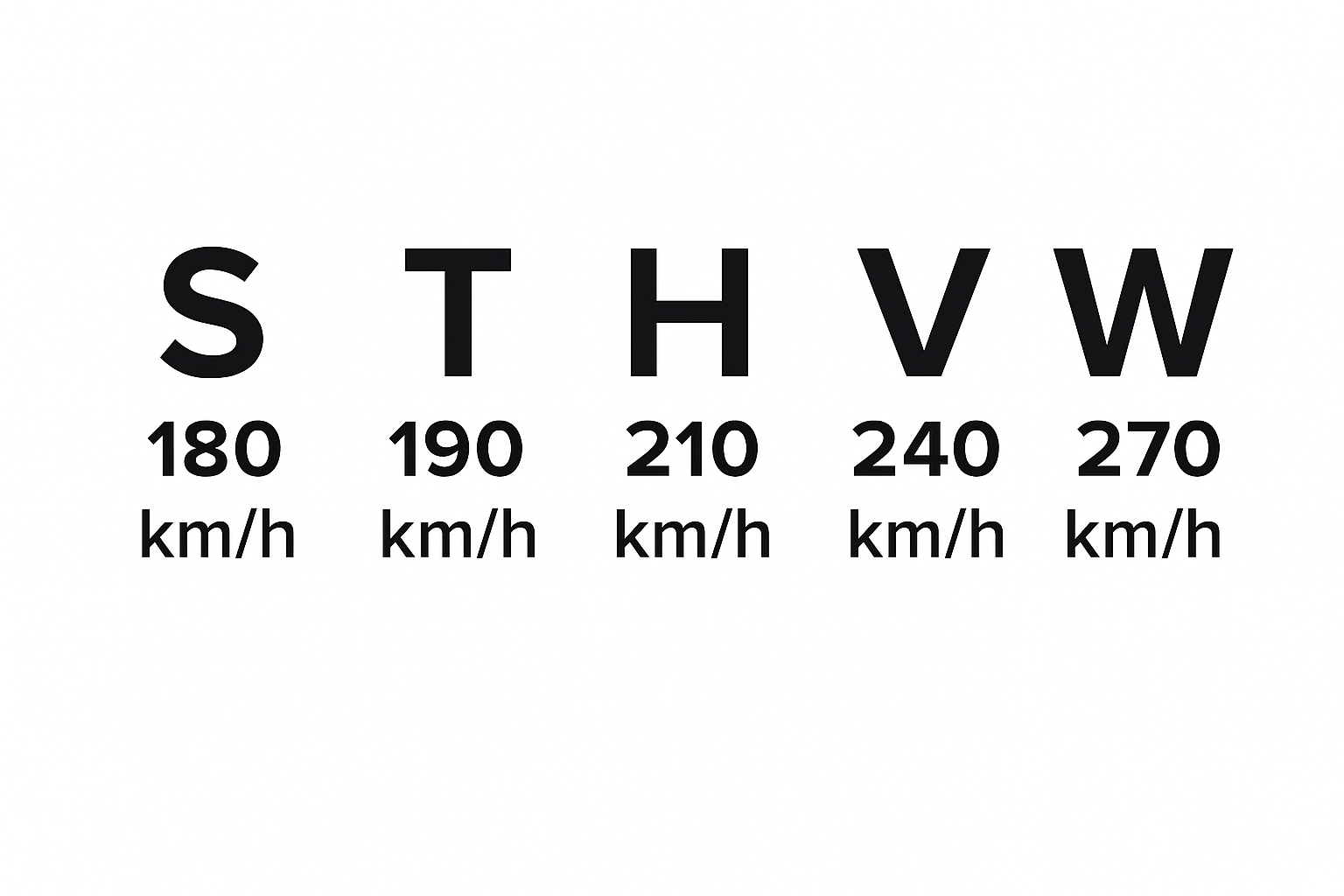
Speed rating quick reference
- S: rated to 180 km/h
- T: rated to 190 km/h
- H: rated to 210 km/h
- V: rated to 240 km/h
- W: rated to 270 km/h
Many SA family cars leave the factory with H or V. Fitting a tyre with a lower letter (e.g. placard says V, you buy H) is not a smart saving. Workshops may refuse fitment, and you are below manufacturer spec.
What goes wrong with the wrong load index
This is where “it’s only a number” ends. A tyre below spec is asked to flex and heat more than it was built for. On a hot day, fully loaded, at 120 km/h between Joburg and Durban, that extra heat shows up as:
- Sidewall bulging: the tyre looks “pregnant” at the bottom; the structure is under serious stress.
- Blowouts: sudden failure, often on the rear of heavily loaded bakkies and SUVs.
- Uneven wear: even if it does not fail immediately, the tread shoulders can scrub off faster.
- Insurance and roadworthy: assessors compare what was fitted to the placard. Under-rated tyres give them an easy out.
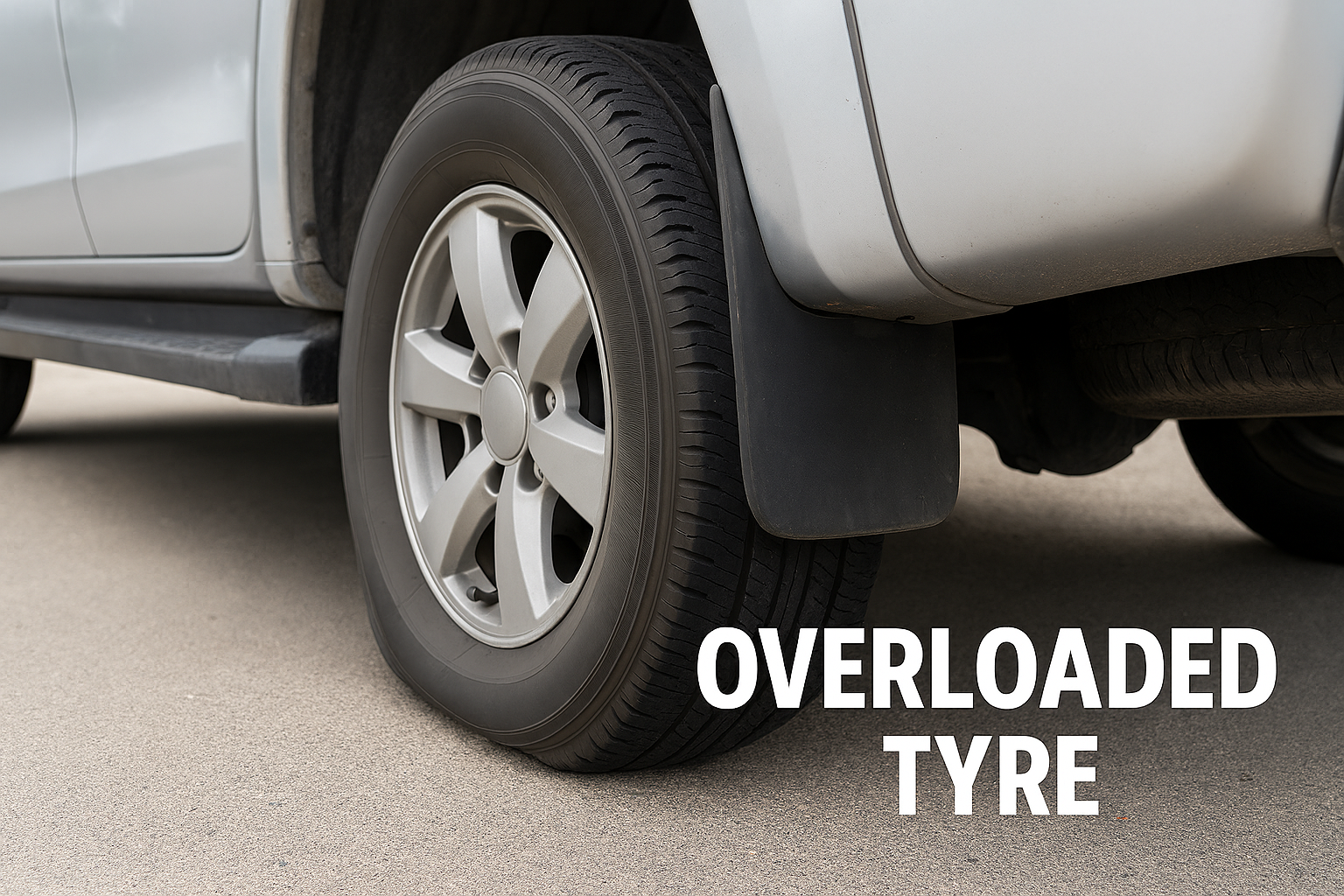
Can you go higher? Usually yes. A 95 load index on a car that asks for 91 is fine (you are not exceeding rim width limits). Going lower is the problem. If you tow, add roof load, or run a taxi, treat the placard as a minimum, not a target to undercut.
Where to find your size in SA
Online quotes are useless if the size is wrong. Check in this order:
- Driver’s door jamb placard: primary source. Open the driver door and look on the B-pillar or door edge. Some VWs also print a sticker in the fuel flap.
- Owner’s manual: useful when the placard is faded or missing; confirm trim year (GTI vs base Golf use different sizes).
- Current tyre sidewall: only if you trust the car is still on factory fitment. Second-hand cars may have the wrong size from a previous owner.
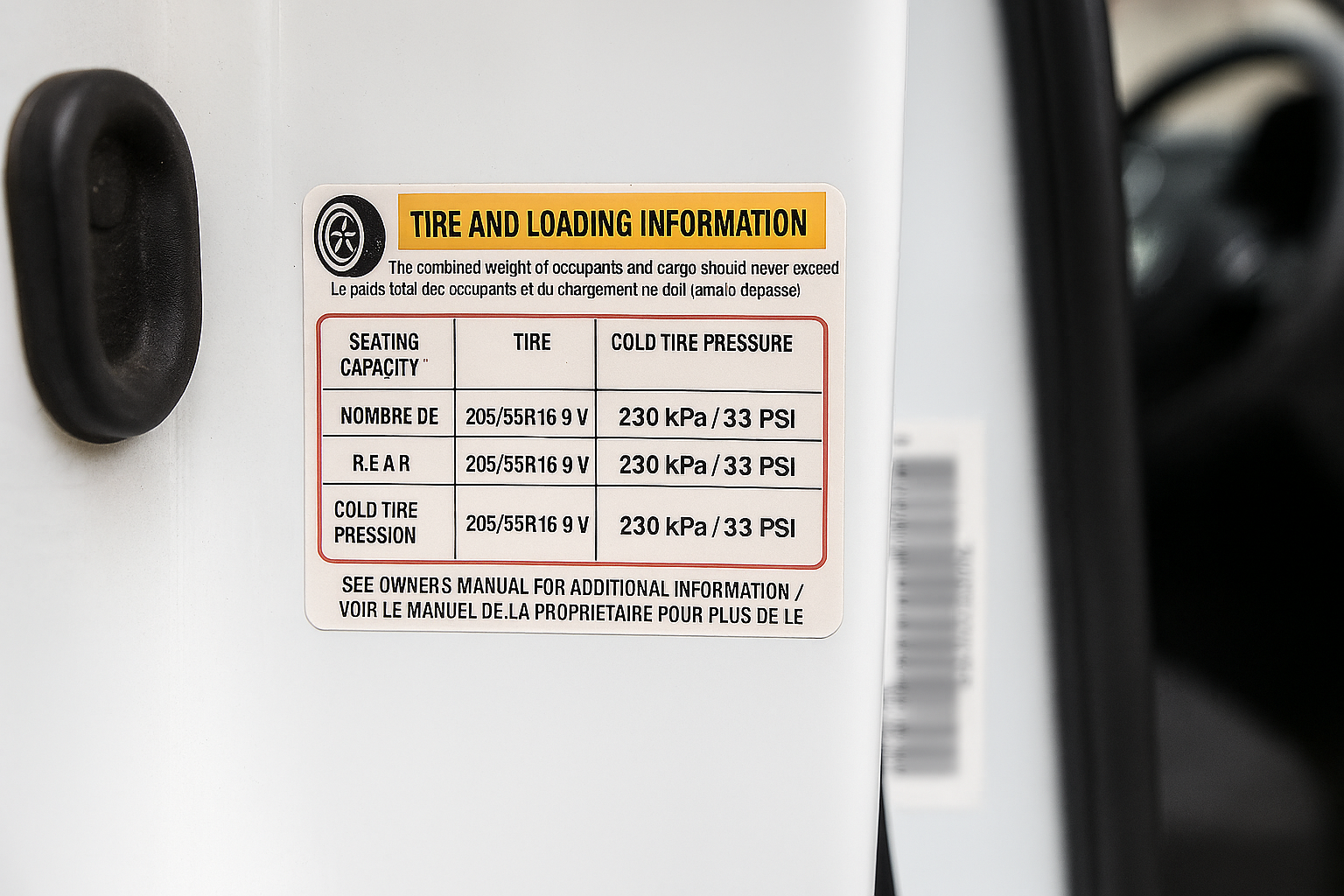
Shopping by model name instead of numbers? Start with our vehicle tyre finder (e.g. Hilux, Polo), then always confirm on the placard before you pay. Trim, wheel option, and year change the sticker.
Plus-sizing and alternatives
Upsizing from 205/55 R16 to something like 225/45 R17 is popular for looks. It can work, but only when the overall diameter stays within what the manufacturer allows. Too large and you get:
- Speedometer reading low (you think you are slower than you are).
- Scrubbing on inner guards over bumps, common on lowered cars in JHB.
- ABS/ stability calibration that assumed the original rolling radius.
Too small a diameter stresses gearing and ground clearance. If a workshop suggests “close enough”, ask for the approved alternative list for your exact model year. Our tyre size pages list related dimensions so you can compare prices on legal neighbours, not random eBay specials.
Before you compare prices
Write down three things from your placard: full size (e.g. 205/55 R16), load index (e.g. 91), and speed rating (e.g. V). Search that exact pattern on TyreCompare, filter by your city if you need local fitment, and check whether the listing includes fitment in the price. If anything on the quote does not match the sticker, stop and fix the spec first. The cheapest wrong tyre is the expensive one.
Still unsure? Read when to replace tyres in SA or what tyres cost in 2026, then run a live comparison for 195/65 R15 or your size from the sticker.